
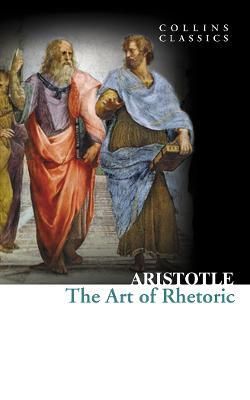
The Art of Rhetoric

 Share
Share
Despite dating from the 4th century BC, The Art of Rhetoric continues to be regarded by many as the single most important work on the art of persuasion. As democracy began emerging in 5th-century Athens, public speaking and debate became an increasingly important tool to garner influence in the assemblies, councils, and law courts of ancient Greece. In response to this, both politicians and ordinary citizens became desperate to learn greater skills in this area, as well as the philosophy behind it. This treatise was one of the first to provide just that, establishing methods and observations of informal reasoning and style, and has continued to be hugely influential on public speaking and philosophy today. Aristotle, the grandfather of philosophy, student of Plato, and teacher of Alexander the Great, was one of the first people to create a comprehensive system of philosophy, encompassing logic, morality, aesthetics, politics, ethics, and science. Although written over 2,000 years ago, The Art of Rhetoric remains a comprehensive introduction for philosophy students into the subject of rhetoric, as well as a useful manual for anyone today looking to improve their oratory skills of persuasion.
| Author | Aristotle |
|---|---|
| Publisher | HarperCollins Publishers |
| Place | London |
| Year | 2012-09-13 |
| ISBN | 9780007920693 |
| Binding | Paperback |
| Condition | Very Good |
How we describe the condition of our books
We are very proud of the condition of the books we sell (please read our testimonials to find out more!)
New: Exactly as it says.
As New: Pretty much new but shows small signs of having been read; inside it will be clean without any inscriptions or stamps; might contain a remainder mark.
Very Good: Might have some creases on the spine; no hard cracks; maybe slight forward lean and short inscription inside; perhaps very minor bumping on the corners of the book; inside clean but the page edges might be slightly yellowed.
Good: A few creases on the spine, perhaps a forward lean, bumping on corners or shelfwear; maybe an inscription inside or some shelfwear or a small tear or two on the dustjacket; inside clean but page edges might be somewhat yellowed.
Fair: In overall good condition, might have a severe forward lean to the spine, an inscription, bumping to corners; one or two folds on the covers and yellowed pages; in exceptional cases these books might contain some library stamps and stickers or have neat sticky tape which was used to fix a short, closed tear.
Poor: We rarely sell poor condition books, unless the books are in demand and difficult to find in a better condition. Poor condition books are still perfect for a good read, all pages will be intact and none threatening to fall out; most probably a reading copy only.