
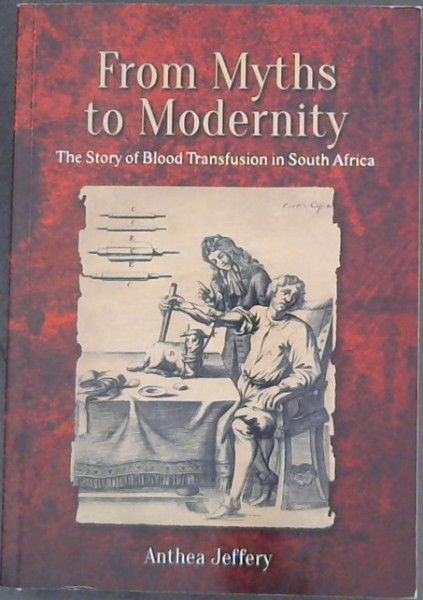
From Myths to Modernity: The Story of Blood Transfusion in South Africa



 Share
Share
For thousands of years, the therapeutic approach to blood was mainly to drain it out of people who were ill by bleeding them - often in debilitating amounts. Where blood was seen as a source of vitality and strength, as in ancient Rome, the idea was to drink it rather than infuse it. It was not until 1628, when England's Dr William Harvey provided a sound description of the circulatory system, that the importance of blood transfusion began to become apparent.
But medical knowledge remained yet rudimentary and was often accompanied by quaint beliefs. Among these was the view that the blood of a gentle lamb would help bring calm to madmen and the severely ill. Hence, the first transfusions, carried out in the 1660s, were often from lamb to man. Not surprisingly, their effect was mostly to kill rather than cure.
Only in the early twentieth century did increased knowledge make blood transfusion safe and confirm its extraordinary healing power. Thereafter, the outbreak of World War II helped generate massive blood transfusion services in Britain and America. It also gave increased impetus to seven fledgling services within South Africa.
Today those seven services have grown and consolidated into two major operations - the South African National Blood Service, which operates in most parts of the country; and the Western Province Blood Transfusion Service, based in Cape Town. South Africa's services currently rank fifth best in the world for safety and sophistication. This is no small achievement for a developing country with the highest burden of HIV/AIDS across the globe.
This book is written in tribute to all who have contributed to the development of blood transfusion in South Africa. Prime among these must rank the voluntary donors without whom no gains could have been made. Also important are the many innovators who helped to make transfusion safe and then expand its therapeutic benefits. No less significant, however, are the men and women who created and built up the seven services across the country. Through their hard work and commitment over 75 years, they have helped to bring the gifts of life and healing to millions of South Africans. Anthea Jeffery holds law degrees from Wits, Cambridge, and London universities. She has written nine books and a host of articles on political, social, and economic issues in South Africa.
| Author | Anthea Jeffery |
|---|---|
| Publisher | SANBS |
| Place | Johannesburg |
| Year | 2012 |
| ISBN | 9780620545792 |
| Binding | Paperback |
| Condition | Very Good |
How we describe the condition of our books
We are very proud of the condition of the books we sell (please read our testimonials to find out more!)
New: Exactly as it says.
As New: Pretty much new but shows small signs of having been read; inside it will be clean without any inscriptions or stamps; might contain a remainder mark.
Very Good: Might have some creases on the spine; no hard cracks; maybe slight forward lean and short inscription inside; perhaps very minor bumping on the corners of the book; inside clean but the page edges might be slightly yellowed.
Good: A few creases on the spine, perhaps a forward lean, bumping on corners or shelfwear; maybe an inscription inside or some shelfwear or a small tear or two on the dustjacket; inside clean but page edges might be somewhat yellowed.
Fair: In overall good condition, might have a severe forward lean to the spine, an inscription, bumping to corners; one or two folds on the covers and yellowed pages; in exceptional cases these books might contain some library stamps and stickers or have neat sticky tape which was used to fix a short, closed tear.
Poor: We rarely sell poor condition books, unless the books are in demand and difficult to find in a better condition. Poor condition books are still perfect for a good read, all pages will be intact and none threatening to fall out; most probably a reading copy only.