
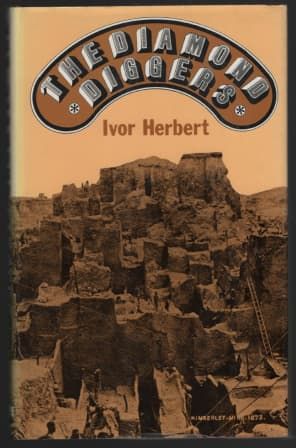
The Diamond Diggers: South Africa 1866 to the 1970's





 Share
Share
Only a hundred years ago ostriches and poor Boer children kicked diamonds around on the bare veld. In 1866, a 15-year-old boy picked up a sparkling pebble for his baby sister. This stone, the Eureka, was the foundation stone of the South African diamond industry. Three years later a Griqua shepherd boy picked up an 83 carat stone and exchanged it for 500 sheep, ten oxen and a horse. It became the Countess of Dudley's fabulous Star of South Africa Where once was bare veld are today great cities and modern mines producing half the world's diamond output - three million carats a year. The story of South Africa's diamonds in The Diamond Diggers brings together the wretched and the mighty, the beautiful and the crude. Ivor Herbert tells of the desperate early days of Kimberley's Diamond Rush – the shanty towns, collapsing pits, whores auctioning themselves for champagne... Above all, it is the story of a few remarkable men: Fleetwood Rawstorne, the jaunty young prospector whose drunken servant found the first diamond on what was to become the Kimberley 'Big Hole'; Cecil Rhodes, the consumptive youth who planned an Empire; his great rival, Barney Barnato, the young East End variety artist who arrived at the Vaal River diggings with a few pounds and forty boxes of cigars, and the deceptively mild Ernest Oppenheimer, who founded the complex organisation which today controls the production and sale of most of the world's diamonds. Many highly dramatic events are described in this fascinating book: Dr Jameson's foolhardy attempt to overthrow the Boer Government in 1895, resulting in Rhodes' political ruin; Barney Barnato's threat to President Kruger to bankrupt the Transvaal if the four Jameson Raid ringleaders were hanged, and his suicide within a year; and the 124-day siege of Kimberley. Even in recent years individuals have struck it rich. The Finsch Mine the only important dia- mond pipe unearthed in South Africa since the Premier Mine was discovered in 1902 - was found by two prospectors (who were searching for asbestos) in 1958. It was bought by De Beers for £24 million in 1963.
| Author | Ivor Herbert |
|---|---|
| Publisher | Tom Stacey |
| Place | London |
| Year | 1972 |
| ISBN | 0854681515 |
| Binding | Hardcover |
| Condition | Good |
| Dustjacket Condition | Good |
| Comments | Pages yellowed; Inscription on last page |
How we describe the condition of our books
We are very proud of the condition of the books we sell (please read our testimonials to find out more!)
New: Exactly as it says.
As New: Pretty much new but shows small signs of having been read; inside it will be clean without any inscriptions or stamps; might contain a remainder mark.
Very Good: Might have some creases on the spine; no hard cracks; maybe slight forward lean and short inscription inside; perhaps very minor bumping on the corners of the book; inside clean but the page edges might be slightly yellowed.
Good: A few creases on the spine, perhaps a forward lean, bumping on corners or shelfwear; maybe an inscription inside or some shelfwear or a small tear or two on the dustjacket; inside clean but page edges might be somewhat yellowed.
Fair: In overall good condition, might have a severe forward lean to the spine, an inscription, bumping to corners; one or two folds on the covers and yellowed pages; in exceptional cases these books might contain some library stamps and stickers or have neat sticky tape which was used to fix a short, closed tear.
Poor: We rarely sell poor condition books, unless the books are in demand and difficult to find in a better condition. Poor condition books are still perfect for a good read, all pages will be intact and none threatening to fall out; most probably a reading copy only.