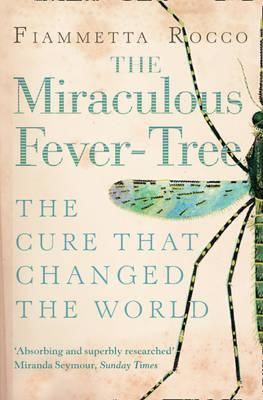
The Miraculous Fever-tree: The Cure That Changed the World
R46.00
Out of stock
SKU
29915
Share
Login to earn BookBucks for sharing!
A rich and wonderful history of quinine -- the cure for malaria. In the summer of 1623, ten cardinals and hundreds of their attendants, engaged in electing a new Pope, died from the 'mal'aria' or 'bad air' of the Roman marshes. Their choice, Pope Urban VIII, determined that a cure should be found for the fever that was the scourge of the Mediterranean, northern Europe and America, and in 1631 a young Jesuit apothecarist in Peru sent to the Old World a cure that had been found in the New -- where the disease was unknown. The cure was quinine, an alkaloid made of the bitter red bark of the cinchona tree, which grows in the Andes. Both disease and cure have an extraordinary history. Malaria badly weakened the Roman Empire. It killed thousands of British troops fighting Napoleon during the Walcheren raid on Holland in 1809 and many soldiers on both sides of the American Civil War. It turned back many of the travellers who explored west Africa and brought the building of the Panama Canal to a standstill. When, after a thousand years, a cure was finally found, Europe's Protestants, among them Oliver Cromwell, who suffered badly from malaria, feared it was nothing more than a Popish poiso well as hitherto undiscovered documents in Peru, Fiammetta Rocco describes the ravages of the disease, the quest of the three Englishmen who smuggled cinchona seeds out of South America, the way quinine opened the door to Western imperial adventure in Asia, Africa and beyond, and why, even today, quinine grown in the eastern Congo still saves so many people suffering from malaria.
More Information
AuthorFiammetta Rocco
PublisherHarperCollins
PlaceLondon
Year2004
ISBN9780006532354
BindingPaperback
ConditionGood
CommentsYellowed pages
0
Rating:
0% of 100
Write Your Own Review
Only registered users can write reviews. Please Sign in or create an account

How we describe the condition of our books

We are very proud of the condition of the books we sell (please read our testimonials to find out more!)

New: Exactly as it says.

As New: Pretty much new but shows small signs of having been read; inside it will be clean without any inscriptions or stamps; might contain a remainder mark.

Very Good: Might have some creases on the spine; no hard cracks; maybe slight forward lean and short inscription inside; perhaps very minor bumping on the corners of the book; inside clean but the page edges might be slightly yellowed.

Good: A few creases on the spine, perhaps a forward lean, bumping on corners or shelfwear; maybe an inscription inside or some shelfwear or a small tear or two on the dustjacket; inside clean but page edges might be somewhat yellowed.

Fair: In overall good condition, might have a severe forward lean to the spine, an inscription, bumping to corners; one or two folds on the covers and yellowed pages; in exceptional cases these books might contain some library stamps and stickers or have neat sticky tape which was used to fix a short, closed tear.

Poor: We rarely sell poor condition books, unless the books are in demand and difficult to find in a better condition. Poor condition books are still perfect for a good read, all pages will be intact and none threatening to fall out; most probably a reading copy only.