
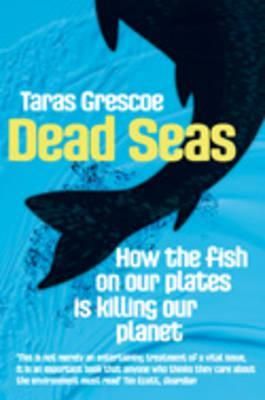
Dead Seas: How the Fish on Our Plates Is Killing Our Planet





 Share
Share
One man’s global search for the perfect plate of seafood – and his quest to uncover exactly where it came from.
There’s simply no limit to the sins people will commit for a tasty meal. The Japanese are notorious for their trade in bluefin tuna, while newlyweds in Bangkok, Shanghai and Singapore devour a gelatinous soup made from poached abalone and fins hacked from living sharks. But surely there’s no need for you to feel bad about ordering sea bass in a London restaurant? Unless, of course, you consider that you may well be enjoying one of the very last members of the species.
In Dead Seas we follow acclaimed journalist Taras Grescoe on a year-long, round-the-world trip, as he eats his way from the top to the bottom of the food chain with one purpose in mind: to find out whether he can continue to eat such delicacies in good conscience. As well as painting a vivid and often hilarious picture of the fascinating people Taras encounters, Dead Seas explores the impact we are having on sea life by overfishing and draws our attention to some of the ethical choices we can make. At a time when many of the fish we take for granted are on the verge of extinction, we need to face the fact that very soon jellyfish sandwiches may be all that is left for us to eat.
*Pages yellowed; name and date on first free page.*
| Author | Taras Grescoe |
|---|---|
| Publisher | Pan Books |
| Place | London |
| Year | 2009 |
| ISBN | 9780330445917 |
| Binding | Paperback |
| Condition | Good |
| Comments | Pages yellowed; name and date on first free page. |
How we describe the condition of our books
We are very proud of the condition of the books we sell (please read our testimonials to find out more!)
New: Exactly as it says.
As New: Pretty much new but shows small signs of having been read; inside it will be clean without any inscriptions or stamps; might contain a remainder mark.
Very Good: Might have some creases on the spine; no hard cracks; maybe slight forward lean and short inscription inside; perhaps very minor bumping on the corners of the book; inside clean but the page edges might be slightly yellowed.
Good: A few creases on the spine, perhaps a forward lean, bumping on corners or shelfwear; maybe an inscription inside or some shelfwear or a small tear or two on the dustjacket; inside clean but page edges might be somewhat yellowed.
Fair: In overall good condition, might have a severe forward lean to the spine, an inscription, bumping to corners; one or two folds on the covers and yellowed pages; in exceptional cases these books might contain some library stamps and stickers or have neat sticky tape which was used to fix a short, closed tear.
Poor: We rarely sell poor condition books, unless the books are in demand and difficult to find in a better condition. Poor condition books are still perfect for a good read, all pages will be intact and none threatening to fall out; most probably a reading copy only.