


 Share
Share
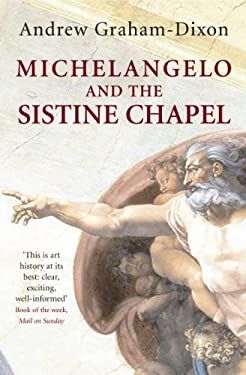
Five hundred years ago Michelangelo put the first brushstroke to his most ambitious creation. As he started work on his vast fresco cycle for the ceiling of the Sistine Chapel, he began putting into pictures the awe-inspiring legends recounted in the Book of Genesis. But for the viewer looking up into Michelangelo's painted sky, this was to be just the first of a series of unprecedentedly original images, rightly celebrated as the quintessential masterpiece of the Renaissance.
Yet the painting of the Sistine Chapel, for all its magnificence, came at a considerable human cost. It would take Michelangelo four years of long and bitter toil to complete his masterpiece, goaded all the while by his volatile, impatient patron, Pope Julius II. In his new study of Michelangelo's work in the Sistine Chapel, Andrew Graham-Dixon retells the story of the Sistine Chapel for modern times, and an essential companion guide for one of the artistic wonders of the world.
| Author | Andrew Graham-Dixon |
|---|---|
| Publisher | Phoenix |
| Place | London |
| Year | 2009 |
| ISBN | 9780753823460 |
| Binding | Paperback |
| Condition | Very Good |
| Comments | With full colour inserts. |
How we describe the condition of our books
We are very proud of the condition of the books we sell (please read our testimonials to find out more!)
New: Exactly as it says.
As New: Pretty much new but shows small signs of having been read; inside it will be clean without any inscriptions or stamps; might contain a remainder mark.
Very Good: Might have some creases on the spine; no hard cracks; maybe slight forward lean and short inscription inside; perhaps very minor bumping on the corners of the book; inside clean but the page edges might be slightly yellowed.
Good: A few creases on the spine, perhaps a forward lean, bumping on corners or shelfwear; maybe an inscription inside or some shelfwear or a small tear or two on the dustjacket; inside clean but page edges might be somewhat yellowed.
Fair: In overall good condition, might have a severe forward lean to the spine, an inscription, bumping to corners; one or two folds on the covers and yellowed pages; in exceptional cases these books might contain some library stamps and stickers or have neat sticky tape which was used to fix a short, closed tear.
Poor: We rarely sell poor condition books, unless the books are in demand and difficult to find in a better condition. Poor condition books are still perfect for a good read, all pages will be intact and none threatening to fall out; most probably a reading copy only.