
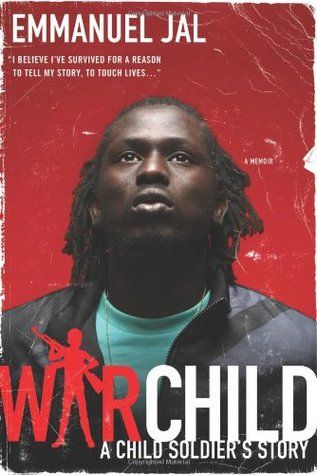
War Child: A Child Soldier's Story

 Share
Share
In the mid-1980s, Emmanuel Jal was a seven year old Sudanese boy living in a small village. But after his mother was killed and his father Simon rose to become a powerful commander in the Christian Sudanese Liberation Army, fighting for the freedom of Sudan. Soon, Jal was conscripted into that army, one of 10,000 child soldiers, and fought through two separate civil wars over nearly a decade.
Orphaned and adrift, Jal lived through horror: marching through miles of desert toward Ethiopia, past the bones of adults and children who had fallen on the trek; witnessing the deaths of friends and family members; killing soldiers and civilians with a gun he could barely lift; starving to the point of near-cannibalism, and coming to the edge of suicide. Remarkably, Jal survived, and his life began to change when he was adopted by a British aid worker. He slowly began the journey that would lead him to music: recording and releasing his own album, which produced the number one hip-hop single in Kenya, and from there went on to perform with Moby, Bono, Peter Gabriel, and other international music stars.
Shocking, inspiring, and finally hopeful, War Child is a memoir by a unique young man determined to tell his story and in so doing bring peace to his homeland.
As an orphaned soldier, Jal marched through miles of desert toward Ethiopia, past the bones of adults and children who had fallen on the trek; witnessing the deaths of friends and family members; killing soldiers with a gun he could barely lift; starving to the point of near-cannibalism; and coming to the edge of suicide.
Remarkably, Jal survived. And his life began to change when he was adopted by a British aid worker. He began the journey that would lead him to change his name and to music: recording and releasing his own album, which produced the number one hip-hop single in Kenya, and from there went on to perform with Moby, Bono, Peter Gabriel, and other international music stars. Shocking, inspiring, and finally hopeful, War Childis a memoir by a unique young man, who is determined to tell his story and in so doing bring peace to his homeland. "Remember, this is a little kid, not even 10 years old, all alone. Hatred, by now, is the only thing that sustains him, hatred for his father, who so brutally double-crossed him, hatred for the Arabs, who he presumes are responsible for this war. There's no glamour here, no pitched battles, only unimaginable misery. Finally, after about two years in the camp, he's recruited into the SPLA, and his real troubles begin. He's beaten and tortured in every possible fashion . . . When he finally does get to kill a few Arabs, he feels no sense of triumph, just sadness. They're human, too, it seems. A couple of miracles happen . . . we know there is a happy ending; otherwise, there wouldn't be this book. Jal becomes a believing Christian and gospel singer. He sets up an organization to help lost boys, but he's . . . often tired and sad and lonely, but in War Child he succeeds in making this crazy war and all its ramifications utterly grounded, specific and real . . . You'll come away from this book loving Emmanuel Jal."?Carolyn See, The Washington Post Book World "Emmanuel Jal is not sure how old he is, but he sets his tentative birthday in 1980, dating the rest of his life from there. He was born in southern Sudan, where the population is mostly black. His father, a clandestine official in the Sudanese People's Liberation Army (SPLA), is a policeman and a member of the Nuer tribe. His mother is half-Nuer, half-Dinka and a practicing Christian. The first three years of his life are peaceful, and then war breaks out. Sudan's Arab population, Muslims from the northern part of the country, hate the blacks from the south, who are often Christian. The conflict, then, is regional, religious, racial . . . Jal's earliest memories are of Arabs beating his mother . . . [he] gets used to bombings, shootings, fire, rape. Then his father leads an SPLA movement to send hundreds of village boys to school in Ethiopia to be educated. 'Ethiopia is a good place,' he tells parents who have gathered on a river bank to say goodbye to their children . . . They board a ship, supervised by soldiers; soon the ship sinks . . . he's been abandoned by his family, and he begins his life as a 'lost boy' . . . he and another large band of children walk for days without food and water . . . When the boys reach Ethiopia, it turns out to be an enormous refugee camp called Pinyudu, where the food has run out and hundreds of people are starving to death . . . Jal sickens enough to make it into the hospital, where he gets some tea and biscuits and kindness; then it's back out into the camp with its polio and cholera and protein-deficiency disease. Remember, this is a little kid, not even 10 years old, all alone. Hatred, by now, is the only thing that sustains him, hatred for his father, who so brutally double-crossed him, hatred for the Arabs, who he presumes are responsible for this war. There's no glamour here, no pitched battles, only unimaginable misery. Finally, after about two years in the camp, he's recruited into the SPLA, and his real troubles begin. He's beaten and tortured in every possible fashion . . . When he finally does get to kill a few Arabs, he feels no sense of triumph, just sadness. They're human, too, it seems. A couple of miracles happen. Jal sees a vision of Jesus, who advises him against cannibalism. His best friend has died during the night, and lies, still warm, beside him. Jal is perishing with hunger. How bad could it be to take a few bites out of his friend just to stay alive? Jesus talks him out of it. But can the vision be real? What does turn out to be real is that he's singled out by a prominent English aid worker who takes him into her own home. He ends up in Nairobi . . . He pursues his education in fits and starts. He's ashamed of his appe
| Author | Emmanuel Jal; Megan Lloyd Davies |
|---|---|
| Publisher | St. Martin's Griffin |
| Place | New York |
| Year | 2009 |
| ISBN | 9780312602970 |
| Binding | Paperback |
| Condition | Good |
How we describe the condition of our books
We are very proud of the condition of the books we sell (please read our testimonials to find out more!)
New: Exactly as it says.
As New: Pretty much new but shows small signs of having been read; inside it will be clean without any inscriptions or stamps; might contain a remainder mark.
Very Good: Might have some creases on the spine; no hard cracks; maybe slight forward lean and short inscription inside; perhaps very minor bumping on the corners of the book; inside clean but the page edges might be slightly yellowed.
Good: A few creases on the spine, perhaps a forward lean, bumping on corners or shelfwear; maybe an inscription inside or some shelfwear or a small tear or two on the dustjacket; inside clean but page edges might be somewhat yellowed.
Fair: In overall good condition, might have a severe forward lean to the spine, an inscription, bumping to corners; one or two folds on the covers and yellowed pages; in exceptional cases these books might contain some library stamps and stickers or have neat sticky tape which was used to fix a short, closed tear.
Poor: We rarely sell poor condition books, unless the books are in demand and difficult to find in a better condition. Poor condition books are still perfect for a good read, all pages will be intact and none threatening to fall out; most probably a reading copy only.