
 Share
Share
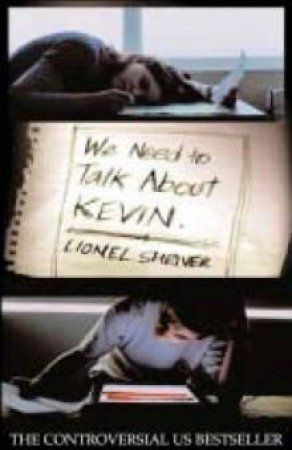
That neither nature nor nurture bears exclusive responsibility for a child's character is self-evident. But such generalizations provide cold comfort when it's your own son who's just opened fire on his fellow students and whose class photograph--with its unseemly grin--is blown up on the national news.
The question of who's to blame for teenage atrocity tortures our narrator, Eva Khatchadourian. Two years ago, her son, Kevin, murdered seven of his fellow high-school students, a cafeteria worker, and a popular algebra teacher. Because he was only fifteen at the time of the killings, he received a lenient sentence and is now in a prison for young offenders in upstate New York.
Telling the story of Kevin's upbringing, Eva addresses herself to her estranged husband through a series of letters. Fearing that her own shortcomings may have shaped what her son has become, she confesses to a deep, long-standing ambivalence about both motherhood in general and Kevin in particular. How much is her fault?
We Need to Talk About Kevin offers no pat explanations for why so many white, well-to-do adolescents--whether in Pearl, Paducah, Springfield, or Littleton--have gone nihilistically off the rails while growing up in suburban comfort. Instead, Lionel Shriver tells a compelling, absorbing, and resonant story while framing these horrifying tableaux of teenage carnage as metaphors for the larger tragedy--the tragedy of a country where everything works, nobody starves, and anything can be bought but a sense of purpose.*Yellowed pages*
| Author | Lionel Shriver |
|---|---|
| Publisher | Serpents Tail |
| Place | London |
| Year | 2011 |
| ISBN | 9781852428891 |
| Binding | Paperback |
| Condition | Good |
| Comments | Corners curling slightly, yellowed pages |
How we describe the condition of our books
We are very proud of the condition of the books we sell (please read our testimonials to find out more!)
New: Exactly as it says.
As New: Pretty much new but shows small signs of having been read; inside it will be clean without any inscriptions or stamps; might contain a remainder mark.
Very Good: Might have some creases on the spine; no hard cracks; maybe slight forward lean and short inscription inside; perhaps very minor bumping on the corners of the book; inside clean but the page edges might be slightly yellowed.
Good: A few creases on the spine, perhaps a forward lean, bumping on corners or shelfwear; maybe an inscription inside or some shelfwear or a small tear or two on the dustjacket; inside clean but page edges might be somewhat yellowed.
Fair: In overall good condition, might have a severe forward lean to the spine, an inscription, bumping to corners; one or two folds on the covers and yellowed pages; in exceptional cases these books might contain some library stamps and stickers or have neat sticky tape which was used to fix a short, closed tear.
Poor: We rarely sell poor condition books, unless the books are in demand and difficult to find in a better condition. Poor condition books are still perfect for a good read, all pages will be intact and none threatening to fall out; most probably a reading copy only.