
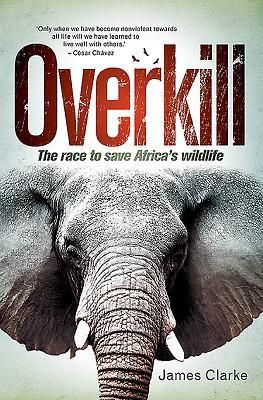
Overkill: The Race to Save Africa's Wildlife

 Share
Share
Ninety percent of the world’s megafauna (its larger creatures) have disappeared since humans migrated from Africa and fanned out across the rest of the world. Within a very short time the megafauna – mammoths, mastodons, woolly rhinoceros and the huge carnivores that preyed upon them were extinct. Only Africa seems to have escaped: not unscathed, but not entirely vanquished either.
This book:
- describes the history and extent of human impact on the worlds wildlife (marine included), good and bad;
- it examines, in particular, the status of wildlife in Africa – the world’s last great megafaunal sanctuary;
- and it questions whether Africa’s wildlife has reached its lowest ebb, and whether it is about to witness the turn of the tide?
The author sounds a note of cautious optimism: conservation initiatives have gained a new urgency in the 21st century, and governments in Africa and elsewhere are showing increasing resolve to tackle poaching. Vast transfrontier parks, many still in development, have the potential to provide a sustainable habitat for the continent’s megafauna.
If we can muster both local and international support, name and shame the rogue nations, and build a practical conservation model that does not conflict with human needs, then Africa’s wildlife can perhaps be saved.
| Author | James Clarke |
|---|---|
| Publisher | Struik |
| Place | Cape Town |
| Year | 2017 |
| ISBN | 9781775845775 |
| Binding | Paperback |
| Condition | Very Good |
How we describe the condition of our books
We are very proud of the condition of the books we sell (please read our testimonials to find out more!)
New: Exactly as it says.
As New: Pretty much new but shows small signs of having been read; inside it will be clean without any inscriptions or stamps; might contain a remainder mark.
Very Good: Might have some creases on the spine; no hard cracks; maybe slight forward lean and short inscription inside; perhaps very minor bumping on the corners of the book; inside clean but the page edges might be slightly yellowed.
Good: A few creases on the spine, perhaps a forward lean, bumping on corners or shelfwear; maybe an inscription inside or some shelfwear or a small tear or two on the dustjacket; inside clean but page edges might be somewhat yellowed.
Fair: In overall good condition, might have a severe forward lean to the spine, an inscription, bumping to corners; one or two folds on the covers and yellowed pages; in exceptional cases these books might contain some library stamps and stickers or have neat sticky tape which was used to fix a short, closed tear.
Poor: We rarely sell poor condition books, unless the books are in demand and difficult to find in a better condition. Poor condition books are still perfect for a good read, all pages will be intact and none threatening to fall out; most probably a reading copy only.