
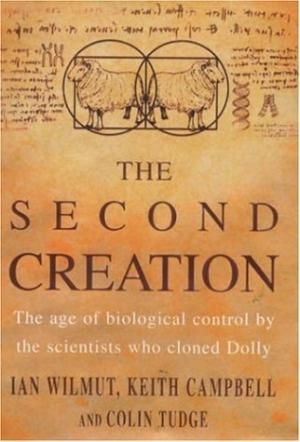
Second Creation: The Age of Biological Control by the Scientists Who Cloned Dolly




 Share
Share
The Second Creation deals with some of the most important issues confronting us today: genetic engineering and cloning, and the control that science has over the process of life. Written by the noted science author Colin Tudge, the book is based on interviews with Ian Wilmut and Keith Campbell, the scientists who cloned Dolly the sheep. Its aim is to explain the story of how and why they came to cloning sheep and the implications for the future, from curing diseases to human cloning. But that's not easy to convey simply, according to Ian Wilmut:
The full story is, however, inescapably complicated. The science and technology of cloning, at least by our method, takes us into some of the most esoteric reaches of biology...
Their subject is complex and requires careful reading, but the reward is worth the effort. Inevitably, the issue of human cloning is looked at in some detail, and all three of the authors find the idea repugnant and do not believe society will accept it:
The pressures for human cloning are powerful; but, although it seems likely that somebody, at some time, will attempt it, we need not assume that it will ever become a common or significant feature of human life.
The book contains a comprehensive glossary to explain the scientific terms and abbreviations.
| Author | Ian Wilmut; Keith Campbell; Colin Tudge |
|---|---|
| Publisher | Headline |
| Place | London |
| Year | 2000 |
| ISBN | 9780747275305 |
| Binding | Paperback |
| Condition | Very Good |
How we describe the condition of our books
We are very proud of the condition of the books we sell (please read our testimonials to find out more!)
New: Exactly as it says.
As New: Pretty much new but shows small signs of having been read; inside it will be clean without any inscriptions or stamps; might contain a remainder mark.
Very Good: Might have some creases on the spine; no hard cracks; maybe slight forward lean and short inscription inside; perhaps very minor bumping on the corners of the book; inside clean but the page edges might be slightly yellowed.
Good: A few creases on the spine, perhaps a forward lean, bumping on corners or shelfwear; maybe an inscription inside or some shelfwear or a small tear or two on the dustjacket; inside clean but page edges might be somewhat yellowed.
Fair: In overall good condition, might have a severe forward lean to the spine, an inscription, bumping to corners; one or two folds on the covers and yellowed pages; in exceptional cases these books might contain some library stamps and stickers or have neat sticky tape which was used to fix a short, closed tear.
Poor: We rarely sell poor condition books, unless the books are in demand and difficult to find in a better condition. Poor condition books are still perfect for a good read, all pages will be intact and none threatening to fall out; most probably a reading copy only.