
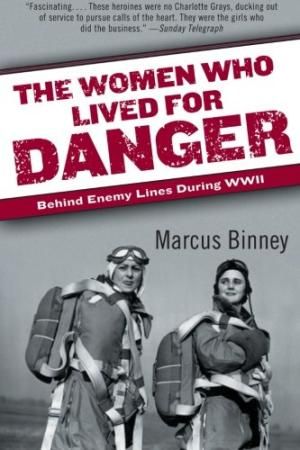
The Women Who Lived for Danger: Behind Enemy Lines During WWII

 Share
Share
"They flirted with men, and with death." In The Women Who Lived for Danger, acclaimed historian Marcus Binney recounts the story of ten remarkable women -- some famous, some virtually unknown -- recruited to work behind enemy lines as secret agents during WWII. Part of Winston Churchill's Special Operations Executive, formed in 1940 to "set Europe ablaze," the women of the SOE were trained to handle guns and explosives, work undercover, endure interrogation by the Gestapo, and use complex codes. Once in enemy territory, theirs was the most dangerous war of all, leading an apparently normal civilian life but in constant danger of arrest and execution. Passing themselves off as country wenches by afternoon and chic Parisiennes by night, these women put service to Britain and the Allied forces above all concerns for personal safety -- they organized dropping grounds for arms and explosives destined for the Resistance, helped operate escape lines for airmen who had been shot down over Europe, and provided Allied Command with vital intelligence.
The exploits of those chronicled in The Women Who Lived for Danger form a new chapter of heroism in the history of warfare matched only by their legacy of daring, determination, resourcefulness, and ability to stay cool in the face of extreme danger.
| Author | Marcus Binney |
|---|---|
| Publisher | Perennial |
| Place | New York |
| Year | 2004-10-01 |
| ISBN | 9780060540883 |
| Binding | Paperback |
| Condition | Very Good |
How we describe the condition of our books
We are very proud of the condition of the books we sell (please read our testimonials to find out more!)
New: Exactly as it says.
As New: Pretty much new but shows small signs of having been read; inside it will be clean without any inscriptions or stamps; might contain a remainder mark.
Very Good: Might have some creases on the spine; no hard cracks; maybe slight forward lean and short inscription inside; perhaps very minor bumping on the corners of the book; inside clean but the page edges might be slightly yellowed.
Good: A few creases on the spine, perhaps a forward lean, bumping on corners or shelfwear; maybe an inscription inside or some shelfwear or a small tear or two on the dustjacket; inside clean but page edges might be somewhat yellowed.
Fair: In overall good condition, might have a severe forward lean to the spine, an inscription, bumping to corners; one or two folds on the covers and yellowed pages; in exceptional cases these books might contain some library stamps and stickers or have neat sticky tape which was used to fix a short, closed tear.
Poor: We rarely sell poor condition books, unless the books are in demand and difficult to find in a better condition. Poor condition books are still perfect for a good read, all pages will be intact and none threatening to fall out; most probably a reading copy only.