
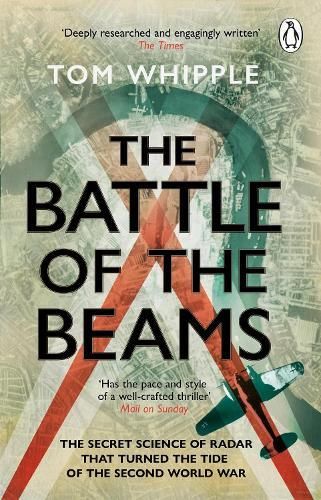
The Battle of the Beams: The Secret Science of Radar That Turned the Tide of the Second World War


 Share

War is coming. The British believe that, through ingenuity and scientific prowess, they alone have a war-winning weapon: radar. They are wrong. The Germans have it too. They believe that their unique maritime history means their pilots have no need of navigational aids. They are wrong. Most of the bombs the RAF will drop in the first years of the war land miles from their target. They also believe that the Germans, without the same naval tradition, will never be able to find targets at night. They are, again, wrong. In 1939 the Germans don't just have radar to spot planes entering their airspace, they have radio beams to guide their own planes into enemy airspace. This war will be fought on land and sea and in the air, but it will also be fought on the airwaves. It will be fought between scientists on both sides at the forefront of knowledge, and the agents and commandos they relied on to bolster that knowledge. Thanks to one young engineer, Reginald Jones, the British develop radar technology that went on to help the Allies win the war.
| Author | Tom Whipple |
|---|---|
| Publisher | Penguin Books |
| Place | London |
| Year | 2024-05-09 |
| ISBN | 9780552177801 |
| Binding | Paperback |
| Condition | As New |
How we describe the condition of our books
We are very proud of the condition of the books we sell (please read our testimonials to find out more!)
New: Exactly as it says.
As New: Pretty much new but shows small signs of having been read; inside it will be clean without any inscriptions or stamps; might contain a remainder mark.
Very Good: Might have some creases on the spine; no hard cracks; maybe slight forward lean and short inscription inside; perhaps very minor bumping on the corners of the book; inside clean but the page edges might be slightly yellowed.
Good: A few creases on the spine, perhaps a forward lean, bumping on corners or shelfwear; maybe an inscription inside or some shelfwear or a small tear or two on the dustjacket; inside clean but page edges might be somewhat yellowed.
Fair: In overall good condition, might have a severe forward lean to the spine, an inscription, bumping to corners; one or two folds on the covers and yellowed pages; in exceptional cases these books might contain some library stamps and stickers or have neat sticky tape which was used to fix a short, closed tear.
Poor: We rarely sell poor condition books, unless the books are in demand and difficult to find in a better condition. Poor condition books are still perfect for a good read, all pages will be intact and none threatening to fall out; most probably a reading copy only.